Where to start
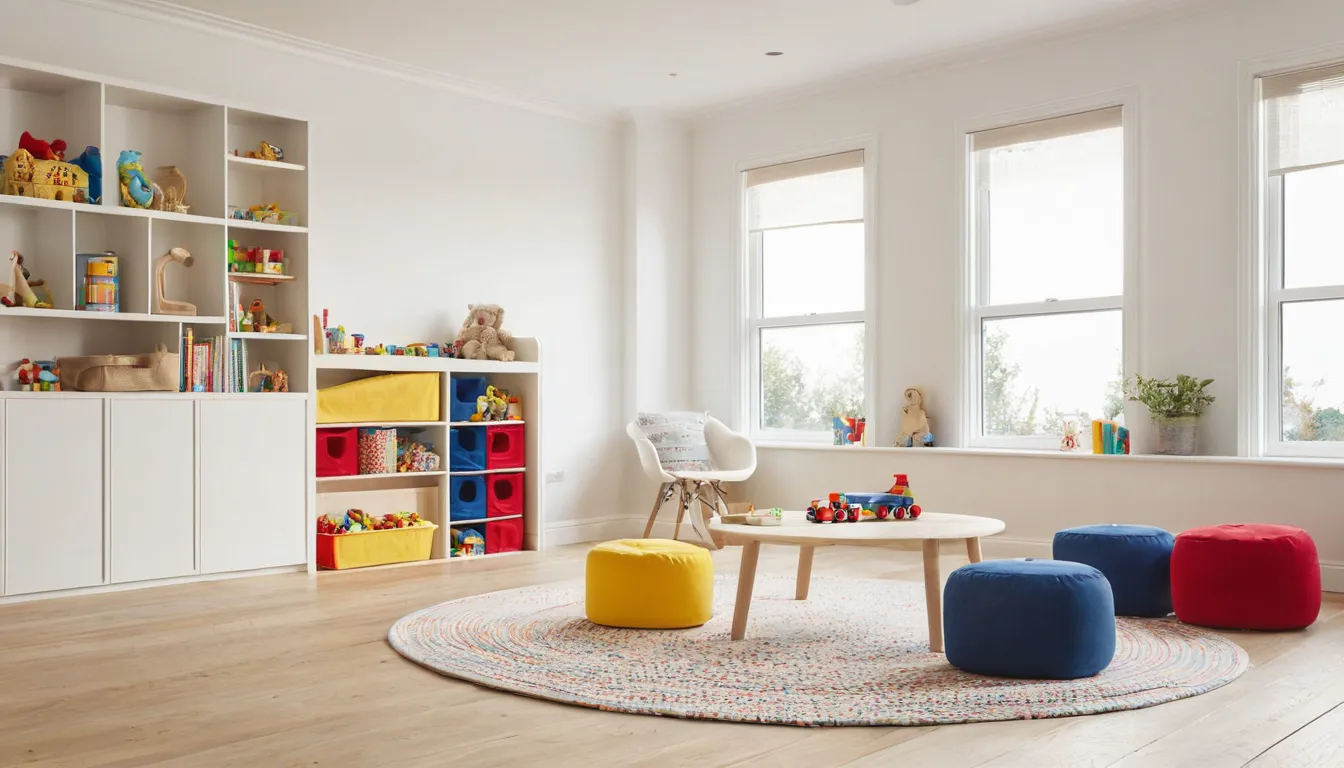
A good playroom does not need a big budget or a spare room. It needs a clear floor, storage at the right height, a few defined areas for different kinds of play, and furniture that cannot tip. Most of the work is deciding what goes where, and how many toys are out at once.
Layouts by age
What a toddler room needs compared with a room for an eight-year-old, from floor space to shelf height.
Play zones
Split one room into areas for building, pretend play, art and quiet time, using rugs and shelves.
Toy storage
Open shelves, bins and baskets that kids can reach, sort and put away on their own.
Safety first
Anchor furniture, manage cords and keep small parts away from young children.
Fewer toys out, more play
Many families find that kids play longer when fewer toys are on the shelves. Toy rotation keeps most toys in a closet and brings a few bins out at a time. The board below shows one simple plan: six bins, three out at once, and one swap a week. Each block is a bin on the shelf. A thick outline marks a bin that has just come back from a rest.
out on the shelf back from a rest resting in the closet
6 bins, 3 out at a time, 6 weeks shown. Books, a ball and a favorite comfort toy stay out all the time.
- Week 1: start with Building, Pretend play, Vehicles
- Week 2: Puzzles out, Building back in the closet
- Week 3: Art and dough out, Pretend play back in the closet
- Week 4: Small world out, Vehicles back in the closet
- Week 5: Building out, Puzzles back in the closet
- Week 6: Pretend play out, Art and dough back in the closet
The full method, including how to sort toys into bins and what to do when a child asks for something that is resting, is on the toy rotation page.
A one-afternoon playroom reset
- Take everything off the floor and shelves, and sort toys into rough groups such as building, pretend play, vehicles, art and puzzles.
- Pull out broken toys, toys with missing pieces, and anything too young or too old for the kids who use the room.
- Check that tall shelves and dressers are anchored to the wall. If not, do that before you put anything back. See how to anchor furniture.
- Choose a home for each group: a bin, a basket or a shelf. Keep the heaviest items low.
- Put out only some of the groups. Box up the rest for rotation.
- Add picture or word labels so kids know where things go. The cleanup guide has a simple routine.
No spare room?
A playroom can be a corner of the living room, a strip along a bedroom wall, or a closet with the doors removed. The small-space playroom guide covers how to fit play into a few square feet and put it all away at night.
This is general information. For current rules, recalls and product guidance in the United States, check the Consumer Product Safety Commission. Outside the US, check your national product safety agency. For a child's health or development, ask your pediatrician.
Common questions
How many toys should be out at once?
There is no exact number. A useful test is whether your child can tidy the room in about ten minutes with a little help. If cleanup takes much longer, there are probably too many toys out. Rotating bins is one way to cut the number without giving toys away.
Do you sell playroom furniture or toys?
No. Playroom Hub is a free guide and nothing is for sale here. We do not recommend brands or products. See the about page for more.
What is the first safety step in a new playroom?
Anchor anything tall or heavy that a child could pull over, such as bookcases, dressers and TVs. Then check for cords, small parts and window blind cords within reach.